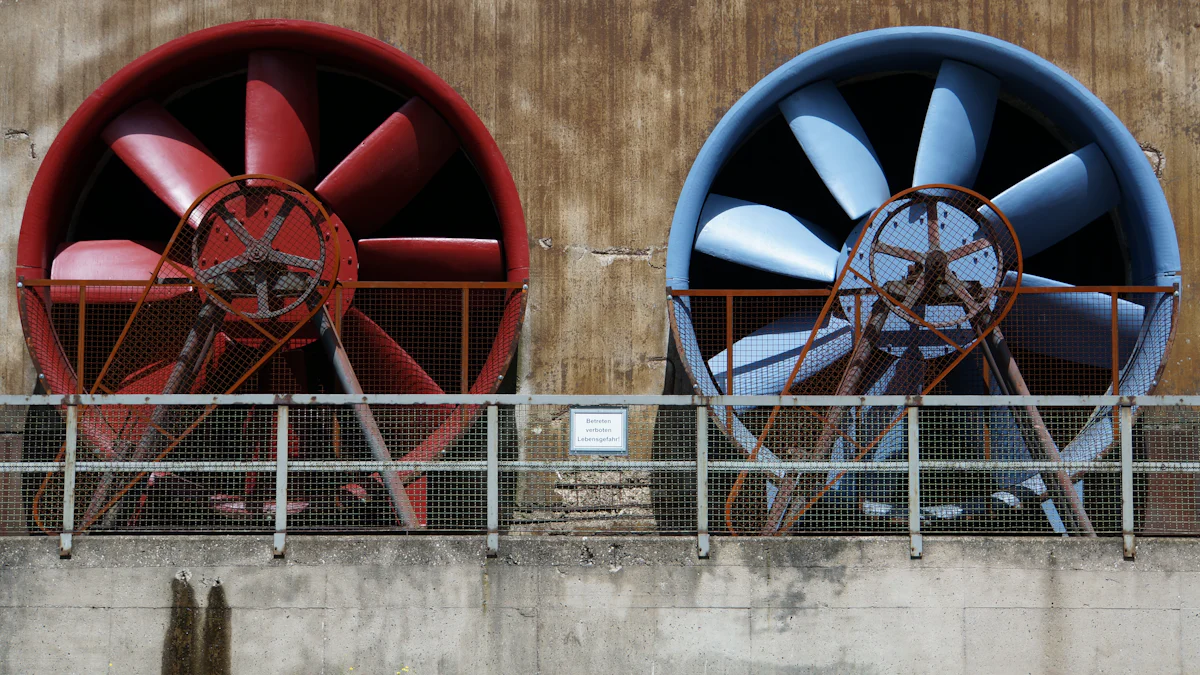
Choosing between axial versus centrifugal fans can significantly impact your operational efficiency and cost-effectiveness. Axial fans, known for their compact design and lower initial cost, excel in scenarios with minimal airflow resistance. They offer higher dynamic pressure, allowing them to move larger volumes of air with less power consumption. In contrast, centrifugal fans, despite their higher upfront cost, provide superior performance in high-resistance applications. They maintain consistent airflow and pressure, making them ideal for demanding environments. Understanding these differences ensures you select the fan type that offers the best value for your specific needs.
Understanding the design and functionality of axial versus centrifugal fans is crucial for selecting the right equipment for your needs. Each fan type offers distinct characteristics that cater to specific applications, ensuring optimal performance and energy efficiency.
Axial fans feature a straightforward design. They consist of blades mounted on a rotating shaft, which allows air to flow parallel to the shaft. This design makes axial fans compact and lightweight, ideal for applications where space is limited. You will find them in cooling systems, ventilation, and HVAC applications due to their ability to move large volumes of air efficiently.
Axial fans excel in scenarios with low resistance. They provide high airflow rates, making them suitable for environments where you need to move air over large areas. Their simple construction results in lower initial costs and easier installation. Additionally, axial fans typically produce less noise compared to centrifugal fans, enhancing their appeal in noise-sensitive settings.
Centrifugal fans, also known as radial fans, have a more complex design. They use a rotating impeller to draw air into the center and then expel it at a 90-degree angle. This design enables centrifugal fans to generate higher pressure, making them suitable for applications requiring high static pressure. You will often see them in industrial settings where robust airflow and pressure are necessary.
Centrifugal fans offer superior performance in high-resistance environments. They maintain consistent airflow and pressure, which is essential for demanding applications. Despite their higher initial cost, centrifugal fans can be more cost-effective in the long run due to their energy efficiency. They are ideal for situations where maintaining airflow under varying conditions is critical.
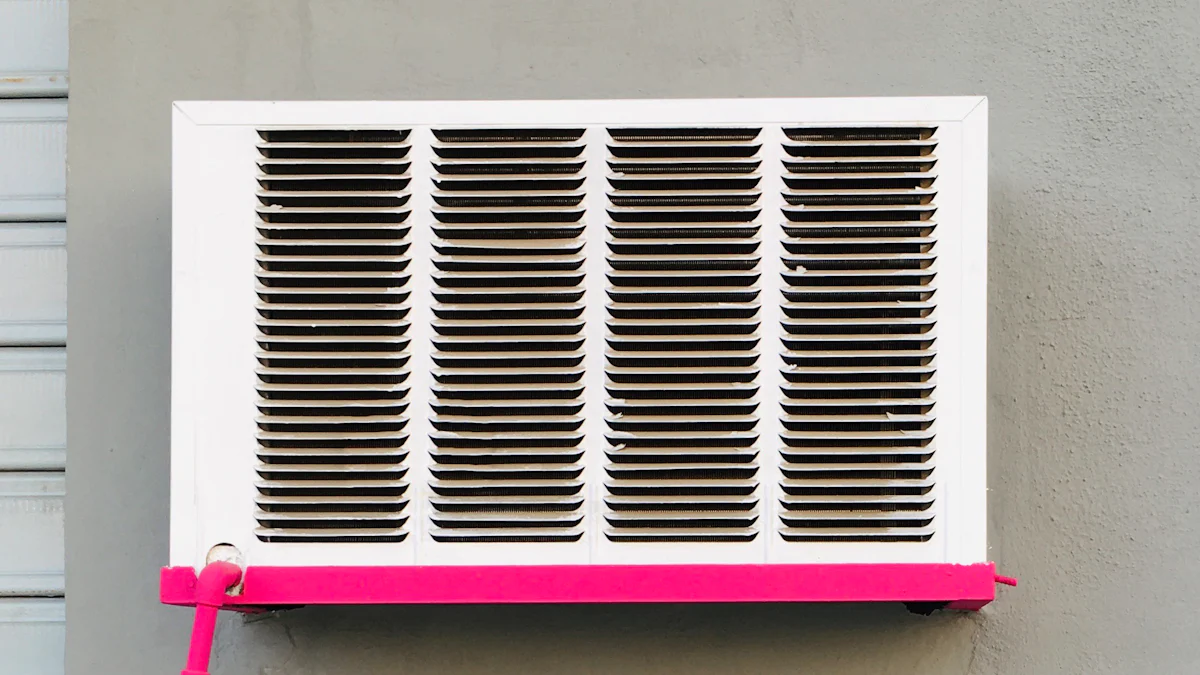
Understanding the airflow and pressure capabilities of axial versus centrifugal fans is essential for selecting the right fan for your application. Each fan type offers unique advantages that cater to different operational needs.
Axial fans excel in applications requiring large volumes of air movement. Their design allows them to generate a constant airflow rate, making them ideal for ventilation and cooling systems. You will find axial fans particularly effective in low-pressure environments where moving air over extensive areas is necessary. Their ability to handle high dynamic pressure with minimal power consumption makes them a preferred choice for many industries.
While axial fans are efficient at moving large volumes of air, they are less effective in high-pressure systems. They perform best in scenarios with minimal resistance, where maintaining airflow without significant pressure build-up is crucial. In applications where high static pressure is not a requirement, axial fans provide an economical and efficient solution.
Centrifugal fans are designed to handle high-pressure environments. They can move air quickly and efficiently through systems with resistors, such as ducts and filters. Although they typically have lower flow rates compared to axial fans, centrifugal fans offer steady and consistent airflow, which is vital in industrial applications like drying and dust collection.
Centrifugal fans shine in high-pressure applications. Their ability to generate significant pressure makes them suitable for demanding environments where maintaining consistent airflow is critical. Despite requiring more energy, centrifugal fans deliver superior performance in systems with high static pressure, justifying their use in complex industrial settings.
When evaluating the energy efficiency of axial versus centrifugal fans, you must consider how each fan type performs in different scenarios. Both fan types have unique characteristics that influence their energy consumption and efficiency.
Axial fans typically consume less energy compared to centrifugal fans. Their straightforward design allows them to operate with minimal power, making them an energy-saving option. You will find that axial fans are particularly efficient in applications with low resistance, such as open spaces or systems with low static pressure. This efficiency results from their ability to generate a constant airflow rate without significant energy expenditure.
In environments where large volumes of air need to be moved, axial fans excel. They maintain high efficiency in scenarios with free air paths, such as ventilation and cooling systems. However, their efficiency can decrease in restricted or confined spaces. For applications like cooling electronic equipment or exhaust systems, axial fans provide a cost-effective solution due to their ability to deliver high airflow with lower energy consumption.
Centrifugal fans generally require more energy to operate than axial fans. This is due to their ability to develop higher pressures, which demands more power. Despite this, centrifugal fans can be more energy-efficient in the long run, especially in high-resistance environments. Their design enables them to maintain consistent airflow and pressure, which is crucial for demanding applications.
Centrifugal fans shine in applications that require handling high static pressure. They perform well in systems with resistors, such as ducts and filters, where maintaining steady airflow is essential. Although they consume more energy initially, their superior performance in high-pressure environments often justifies the energy costs. In industrial settings, where robust airflow and pressure are necessary, centrifugal fans offer a reliable and efficient solution.
When selecting a fan, noise levels play a crucial role in determining the best fit for your environment. Understanding how axial and centrifugal fans differ in noise production can help you make an informed decision.
Axial fans generally produce less noise compared to centrifugal fans. Their simple design, with blades rotating parallel to the airflow, minimizes turbulence and reduces sound levels. This makes axial fans suitable for environments where noise control is essential, such as offices or residential areas. You will find that their quieter operation enhances comfort and productivity in noise-sensitive settings.
The lower noise levels of axial fans contribute positively to the surrounding environment. In spaces where maintaining a peaceful atmosphere is important, axial fans offer a significant advantage. Their ability to operate quietly without compromising airflow makes them ideal for applications like HVAC systems in schools, libraries, and hospitals. By choosing axial fans, you can ensure a harmonious balance between functionality and environmental impact.
Centrifugal fans tend to generate more noise due to their complex design. The impeller's rotation creates higher pressure, which can lead to increased sound levels. In industrial settings, where robust performance is prioritized over noise, centrifugal fans are often the preferred choice. However, you should consider implementing noise-reduction measures, such as soundproofing or using silencers, to mitigate their impact.
The noise produced by centrifugal fans can affect the surrounding environment, especially in areas where quiet operation is necessary. In industrial applications, the focus often shifts to performance, but it's essential to address noise concerns to maintain a comfortable workspace. By consulting with a Technical Expert in fan selection, you can explore options to reduce noise while still benefiting from the superior pressure capabilities of centrifugal fans.
"A proper evaluation required by a technical expert before concluding the type of fan." - Technical Expert
When choosing between axial and centrifugal fans, understanding their maintenance needs and durability is crucial. These factors can significantly impact the long-term value and reliability of your equipment.
Axial fans generally require less maintenance due to their simple design. You will find that their straightforward construction, with fewer moving parts, reduces the likelihood of mechanical failures. Regular cleaning and occasional lubrication of the motor bearings suffice to keep them running smoothly. This ease of maintenance makes axial fans a cost-effective choice for applications where downtime must be minimized.
Axial fans offer impressive longevity, especially in environments with low resistance. Their robust design withstands regular use, ensuring a long service life. However, in high-pressure settings, their durability may decrease due to increased wear and tear. By selecting axial fans for appropriate applications, you can maximize their lifespan and enjoy reliable performance over time.
Centrifugal fans demand more maintenance compared to axial fans. Their complex design, featuring multiple components like impellers and housings, requires regular inspection and servicing. You should schedule routine checks to ensure optimal performance and prevent potential issues. Despite the higher maintenance needs, centrifugal fans provide consistent airflow and pressure, justifying the effort involved in their upkeep.
Centrifugal fans excel in durability, particularly in high-pressure environments. Their sturdy construction allows them to handle demanding conditions without compromising performance. Although they may have a higher initial cost, their ability to maintain efficiency and reliability over time makes them a valuable investment. By adhering to a regular maintenance schedule, you can extend the lifespan of centrifugal fans and ensure they continue to meet your operational needs.
"A proper evaluation required by a technical expert before concluding the type of fan." - Technical Expert
Choosing between axial versus centrifugal fans requires understanding their distinct benefits and applications. Axial fans excel in low-resistance environments, offering cost-effective solutions with minimal maintenance. Centrifugal fans, however, thrive in high-pressure settings, providing consistent airflow and durability. Your decision should align with specific operational needs and budget considerations. Evaluate the environment and performance requirements to ensure optimal fan selection. By considering these factors, you can maintain efficient system temperatures and enhance overall performance.
Choosing Between Axial and Centrifugal Fans for Applications
Determining the Right Blower Type for Your Industry
Comparative Analysis of Leading Blower Fan Brands
