
Industrial fans play a crucial role in various sectors, ensuring optimal air movement and environmental control. These fans maintain comfort and safety in large workspaces like factories and warehouses. Selecting the right fan is vital for specific applications. For instance, industrial fans prevent moisture buildup in food processing facilities and remove smoke and dust in metalworking shops. The market for these fans is expanding rapidly, with projections reaching US$ 15.96 billion by 2031. Understanding the differences between fan types ensures informed decision-making in diverse industrial settings.
Industrial fans are devices designed to move air in large spaces. These fans use heavy-duty materials and components to withstand demanding conditions. The primary purpose of industrial fans is to ensure efficient air circulation and environmental control in various settings. Unlike residential fans, industrial fans handle larger volumes of air and operate under more stringent requirements.
Industrial fans play a critical role in maintaining safety and comfort in workplaces. Factories and warehouses rely on these fans for effective air handling systems. Industrial fans help prevent moisture buildup and remove contaminants like smoke and dust. High-quality fans contribute to a safer and more efficient environment. Selecting the right fan type ensures optimal performance tailored to specific needs.
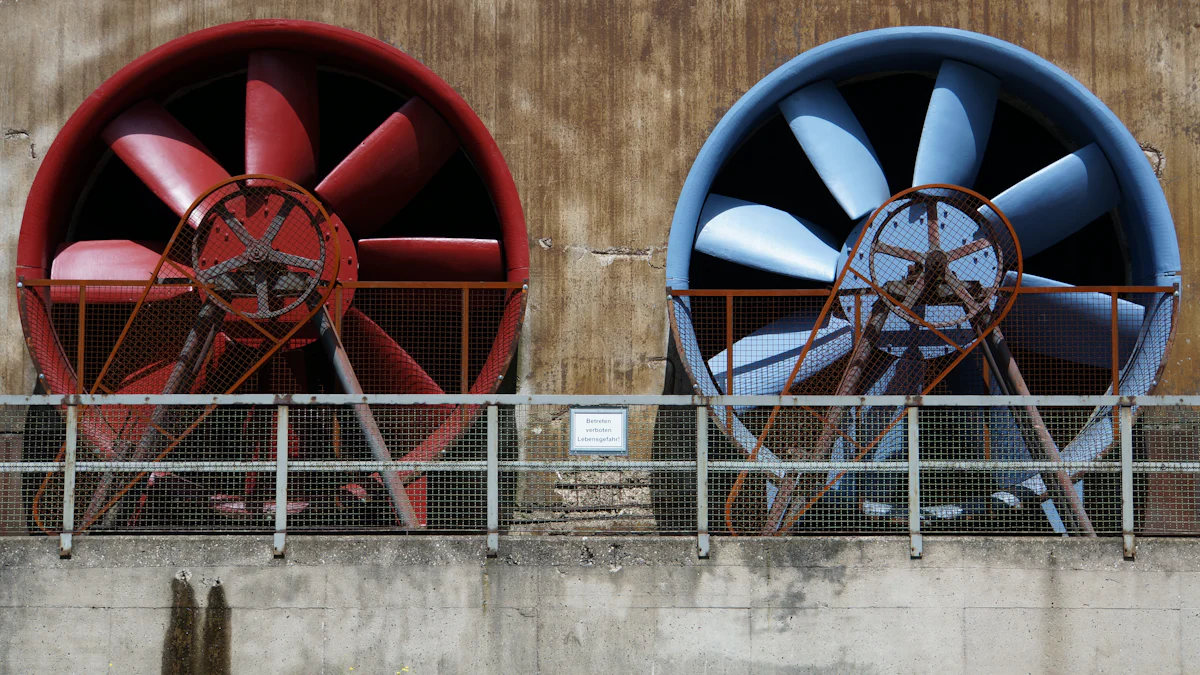
Axial fans feature a straightforward design. The fan blades are mounted on a central hub. This hub connects to a motor. The blades rotate around the axis of the fan. This design allows air to flow parallel to the axis. Axial fans are typically smaller and lighter than other industrial fans. The compact structure makes them suitable for various applications.
Axial fans operate by drawing air in through the blades. The blades push the air in the same direction as the axis. This process creates a high volume of airflow at low pressure. Axial fans require less power to operate. The efficiency makes them cost-effective for many uses. The design also results in higher operating speeds.
Propeller fans are the most basic type of axial fans. These fans have a simple blade design. The blades resemble a ship's propeller. Propeller fans are ideal for moving large volumes of air. They are often used in ventilation systems.
Tubeaxial fans feature a cylindrical housing. The housing directs the airflow. This design improves efficiency. Tubeaxial fans are suitable for ducted applications. These fans are often used in cooling systems.
Vaneaxial fans include guide vanes. The vanes straighten the airflow. This design increases pressure and efficiency. Vaneaxial fans are used in high-pressure applications. These fans are common in industrial processes.
Axial fans are widely used in ventilation systems. Factories and warehouses rely on these fans. The fans move large volumes of air efficiently. Ventilation systems benefit from the low-pressure airflow. Axial fans help maintain air quality and comfort.
Axial fans play a crucial role in cooling systems. The fans dissipate heat effectively. Cooling systems in industrial settings often use axial fans. The fans provide a steady flow of air. This airflow helps regulate temperature.
Axial fans excel in energy efficiency. These fans require less power to operate compared to other fan types. The design allows for high airflow at low pressure. This characteristic reduces energy consumption significantly. Industries benefit from lower operational costs. The fans' lightweight structure contributes to their efficiency. Smaller motors can drive these fans effectively. This feature further enhances energy savings.
Axial fans offer a cost-effective solution for many applications. The straightforward design reduces manufacturing costs. Industries find these fans more affordable than centrifugal fans. Maintenance costs remain low due to the simple structure. The fans' durability ensures a long lifespan. Replacement parts are readily available and inexpensive. Axial fans provide excellent value for their price. Their affordability makes them a popular choice in various settings.
Key Advantages:
Industries prioritize axial fans for their balance of performance and cost. These fans meet the demands of diverse environments efficiently.
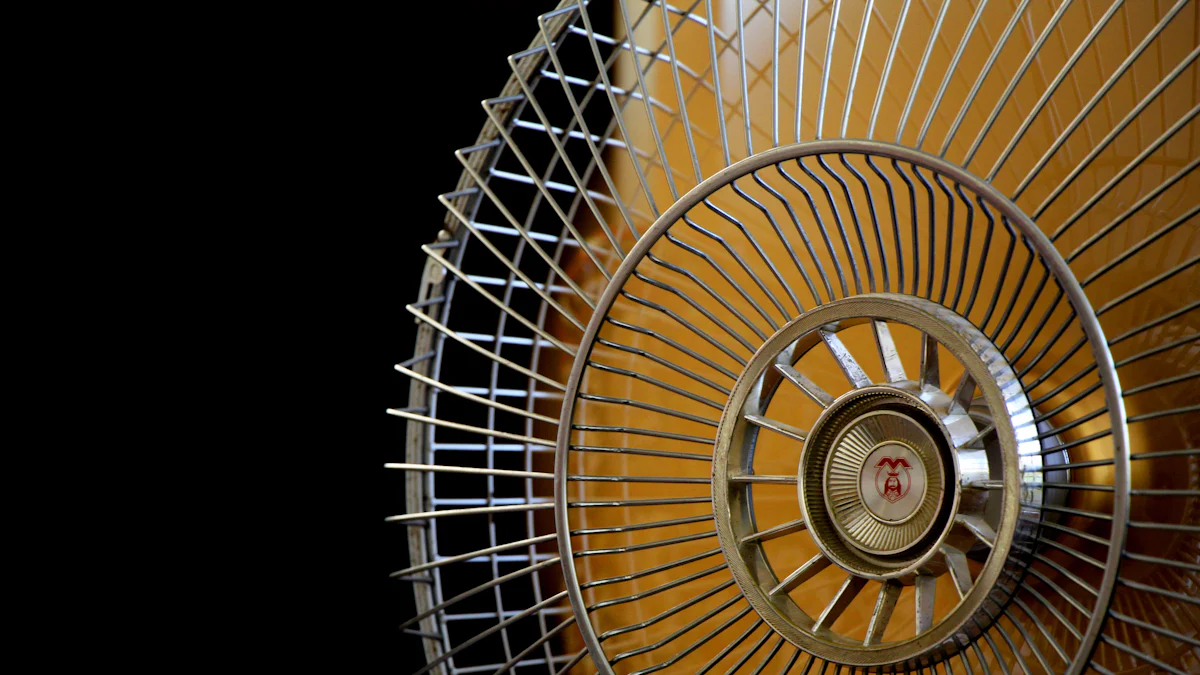
Centrifugal fans feature a robust design. The fan consists of a rotating impeller inside a scroll-shaped housing. This structure allows air to enter the fan and then change direction by 90 degrees. The impeller blades can vary in shape, influencing performance and efficiency. The sturdy construction supports high-pressure applications.
Centrifugal fans operate by drawing air into the center of the impeller. The impeller accelerates the air outward through centrifugal force. This process increases air pressure and velocity. The design enables the fan to handle high-pressure environments effectively. Centrifugal fans offer versatility in industrial settings.
Forward curved fans have blades that curve in the direction of rotation. These fans provide high airflow at low speeds. The design suits applications requiring quiet operation. Forward curved fans are common in residential heating and cooling systems.
Backward curved fans feature blades that curve against the direction of rotation. This design enhances efficiency and reduces noise. The fans handle higher pressures than forward curved fans. Industrial processes often utilize backward curved fans for their reliability.
Radial fans have straight blades extending from the center. The design suits applications needing high pressure and low airflow. Radial fans excel in handling dust and debris. Industries use radial fans in material handling and pneumatic conveying systems.
Centrifugal fans play a vital role in air handling units. These units require fans capable of maintaining consistent airflow and pressure. The fans ensure efficient air distribution in HVAC systems. Centrifugal fans contribute to energy-efficient climate control.
Industrial processes rely on centrifugal fans for various applications. These fans support operations like drying, cooling, and ventilation. The ability to handle high pressure makes them ideal for demanding environments. Centrifugal fans enhance productivity and safety in industrial settings.
Centrifugal fans excel in generating high pressure. The robust design allows these fans to handle demanding environments. Industries often require fans that can manage significant pressure differences. Centrifugal fans meet these needs effectively. The impeller's shape enhances air acceleration. This feature increases the fan's ability to produce higher pressure. Many industrial processes benefit from this capability. High-pressure fans ensure efficient air movement in complex systems.
Centrifugal fans offer remarkable versatility. Various industries utilize these fans for multiple applications. The design supports a wide range of operational requirements. Fans adapt to different settings with ease. Industries employ centrifugal fans for drying, cooling, and ventilation. The ability to handle diverse tasks makes them invaluable. Research on fan performance improvements continues to expand their potential. Modifications in blade profiles enhance efficiency. These advancements increase the fan's adaptability.
Key Advantages:
Centrifugal fans provide essential solutions across many sectors. The combination of high pressure and versatility ensures optimal performance.
Axial fans excel in generating high airflow. The design allows air to move parallel to the axis, resulting in large volumes of air movement. This makes axial fans ideal for applications requiring efficient ventilation and cooling. In contrast, centrifugal fans provide a steadier flow of air. The impeller design enables these fans to handle higher pressure environments effectively. Centrifugal fans are often quieter and more efficient in specific settings.
Centrifugal fans outperform axial fans in handling high-pressure applications. The robust design and impeller structure allow centrifugal fans to overcome resistance with ease. This capability makes them suitable for tasks like dust collection and fume exhaust systems. Axial fans, while efficient in low-pressure scenarios, do not match the pressure capabilities of centrifugal fans. Industries requiring significant pressure differences often choose centrifugal fans for their reliability.
Centrifugal fans prove advantageous in harsh industrial environments. The durable design withstands hot air, particulates, and gases. These fans are frequently used in ductwork for air conditioning and drying systems. The ability to expel air at a 90-degree angle enhances directionality and cooling efficiency. Axial fans, although effective in ventilation, may not perform as well in such demanding conditions.
Axial fans find widespread use in commercial settings. The lightweight and compact design suits applications like general ventilation and cooling. These fans offer cost-effective solutions for environments that do not require high pressure. Centrifugal fans, with their versatility, also serve commercial needs. They adapt well to tasks involving air streams with contaminants. Ventilation specialists often recommend centrifugal fans for efficient cooling and exhaust in commercial spaces.
Axial and centrifugal fans serve distinct purposes in industrial settings. Axial fans excel in high airflow applications, making them ideal for ventilation and cooling. Centrifugal fans handle higher pressure environments effectively, offering versatility across various industries. Selecting the right fan depends on specific needs such as airflow volume or pressure requirements. Informed decision-making ensures optimal performance and safety. Understanding these differences aids in choosing the most suitable fan for any application.
